Individual
Every insole is designed and printed to your customer's foot.
Insoles with hardness zonesin one piece.
CUBIX is go-tec's brand for 3D printing orthopaedic insoles and foot beds – not a separate company and not a third-party system, but technology, printers, software and service by go-tec from Münster. The name comes from “cube”: the inside of every insole consists of many small cubes, and you set the hardness for each cube. This creates soft and firm zones in one part – individual for every foot and 100% recyclable. Printing runs on CUBIX Lite or CUBIX Pro, with CUBIX Pro continuously from 20 to 79 Shore. Design takes place in the ExpertenCAD of GP Manager or automatically with NEXOS One Print; billing is per printed pair.
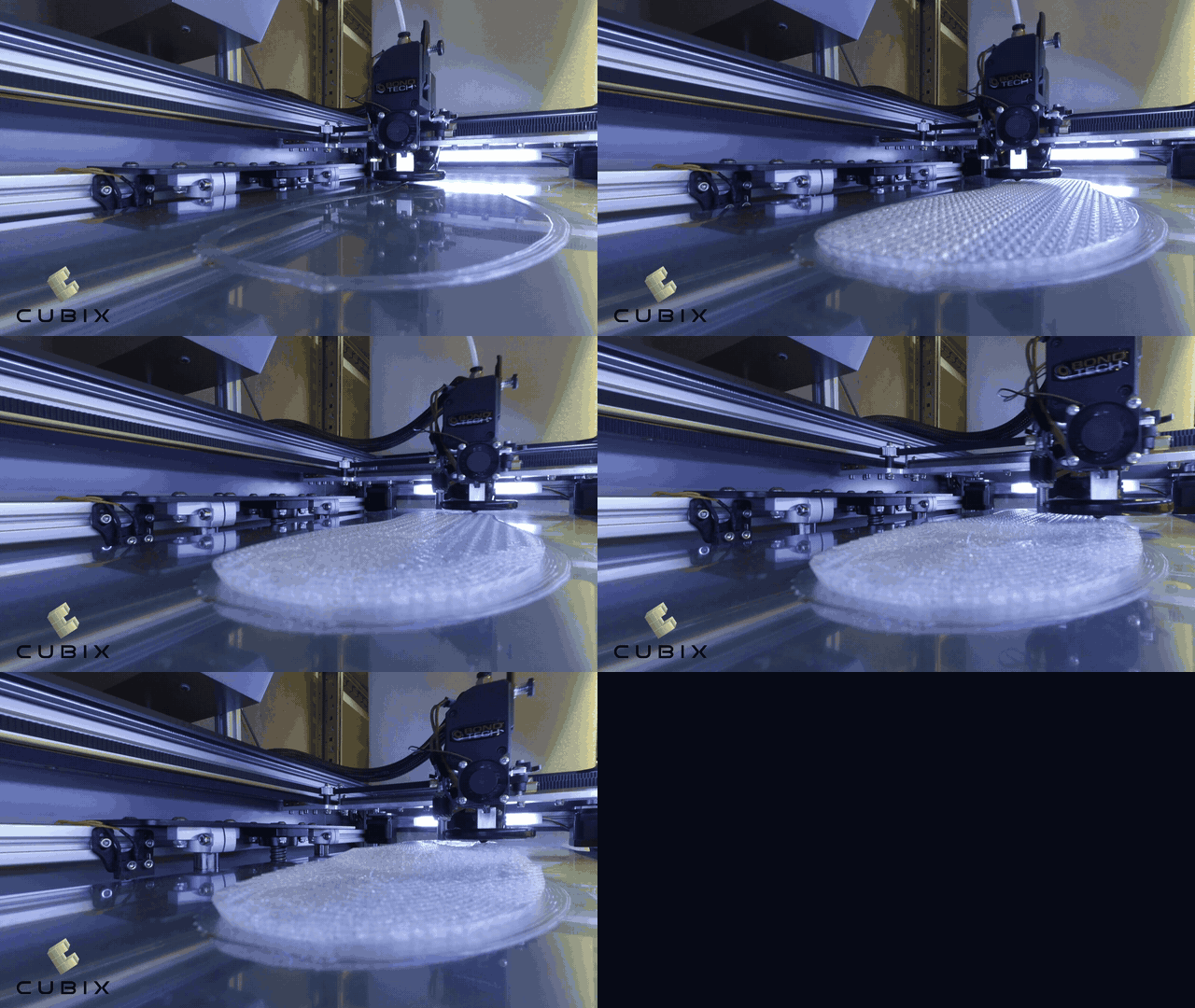
Lattice density and hardness are printed per zone, not glued on afterwards.
Individual
Every insole is designed and printed to your customer's foot.
Different cubes
Many small cubes, each with its own hardness: soft under the heel, firm in the midfoot – without gluing or layering.
100% recyclable
Worn insoles are returned and turned into new material – the old pair becomes filament for the next one.
CUBIX is a brand of go-tec GmbH, Münster.
From 20 to 79 Shore – continuously.
CUBE means cube – and that is exactly the secret of CUBIX technology. You can define the desired hardness for each cube inside the insole and transfer your craft know-how precisely into the fitting.
Soft under the heel, firm in the midfoot – with transitions that have no noticeable edge.
Precise insole production reduces manual rework.
The follow-up pair is identical. Same data set, same result – even after two years.
Only what the insole needs is printed. We also recycle worn insoles.
Hardness is not created by a different material but by lattice density. The denser the lattice, the firmer the zone – built differently for each type of fitting.
The most common fitting: your biomechanical insoles, with heel spur relief and forefoot pad
Control sensorimotor effects precisely
A wide lattice relieves pressure points and gives way on foot strike.
Same principle with predefined hardness ranges – the entry into comfort fittings.
Fits in any shoe.
An insole is only as good as the shoe it goes into. That is why we do not assume the underside is flat but measure it with templates during the fitting – and print it exactly that way.

Instead of estimating the shoe shape, we determine it during the fitting with our insole board templates. Outline, width and course of the inner sole are documented, not assumed. We supply up to 21 different sets.
The underside is no longer a flat plate. It is printed rounded and follows the drop of the shoe – flatter at the front, higher at the back, as the inner sole requires.
Curved undersides need support during printing. CUBIX fills it in by itself, you do not need to plan anything.
Before delivery the support structure is torn off by hand. One movement, no milling, no grinding – the finished contour lies underneath.

CUBIX Lite and CUBIX Pro.
Both printers use the same process and the same billing. They differ in hardness control, printing time and field of application.
| Feature | CUBIX LiteComfort fittings | CUBIX ProPremium fittings |
|---|---|---|
| Field of application | All-rounder, comfort fittings | Diabetes, foot beds, premium |
| Shore hardness | 30–35 / 40–45 / 60 | 20–79, continuous |
| Hardness distribution | soft, medium, hard via models | Individual zone adjustment |
| Printing time per pair | approx. 3 hours | approx. 6 hours |
| Production capacity | approx. 8 pairs per day | approx. 4 pairs per day |
| Heel-to-toe drop | printable – for foot beds and ready-made shoes with rounded heel and drop at the jointsame on both | printable – for foot beds and ready-made shoes with rounded heel and drop at the jointsame on both |
| Support structures | yessame on both | yessame on both |
| 24/7 production | with production modulesame on both | with production modulesame on both |
| Billing | per printed pairsame on both | per printed pairsame on both |
| From the 2nd printer | lower ratesame on both | lower ratesame on both |
Printing times and capacities are guide values. They depend on the insole geometry and are not guaranteed.
 CUBIX printer
You decide who designs.
CUBIX prints both – your own design and the automatically generated one. The printer stays the same.
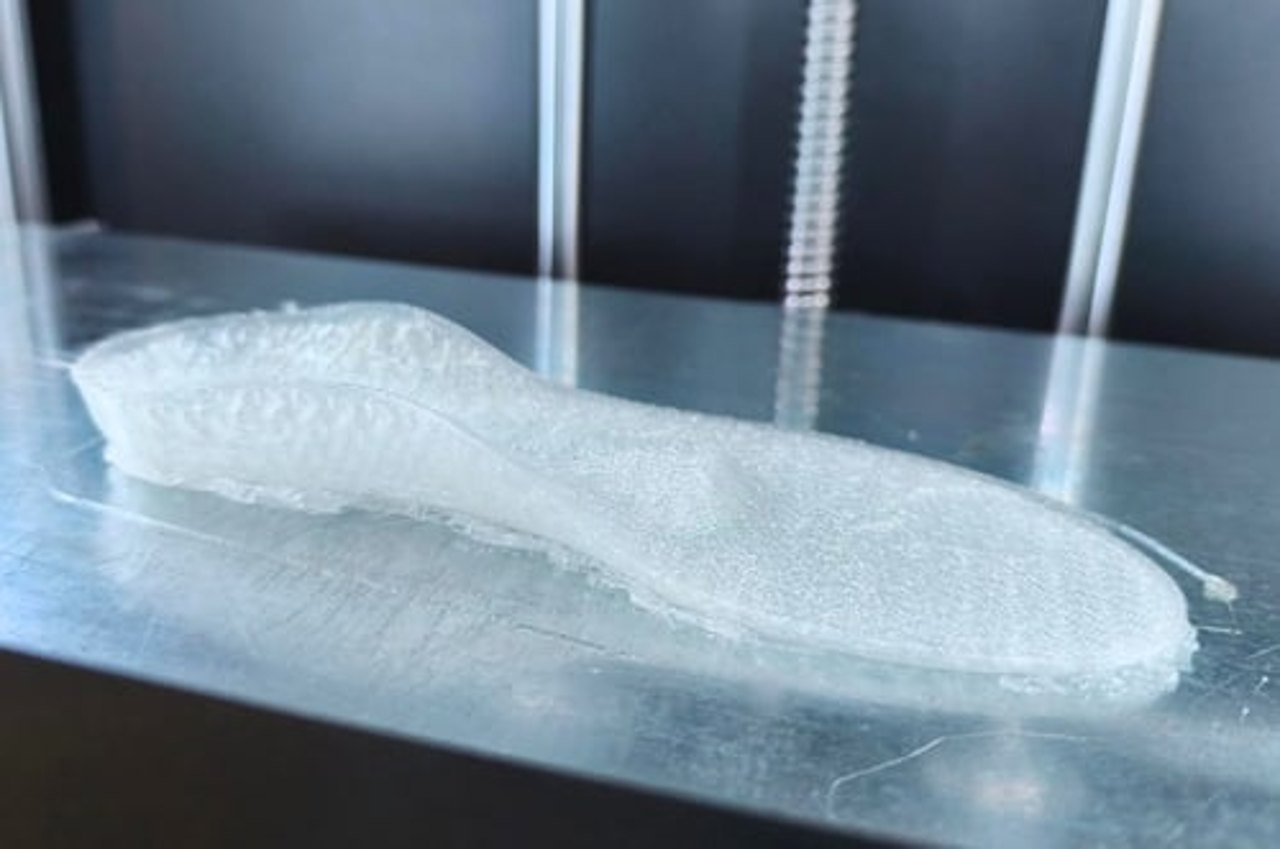
You design as usual and print instead of milling. Your workflows and your signature style stay unchanged.
The insole is created automatically by your rules from the consultation – from scan to print file.
Two employees, three steps.
In the CUBIX Academy two employees learn design, print preparation and post-processing – more participants are possible.
Build the insole and set hardness zones – in your CAD or by your rules in NEXOS One.
Align, choose the lattice, start the print job. Several pairs in one run.
Remove the part, trim, final check – until the pair goes to the fitting.
What businesses ask before printing.
No. CUBIX is go-tec's brand for 3D printing insoles and foot beds. Printer, software, material, training (CUBIX Academy) and service come from go-tec GmbH in Münster. The name stands for the cubes inside the insole, each of which gets its own hardness.
Yes, 100%. Worn CUBIX insoles go back to go-tec and are processed into new filament – the old pair becomes material for the next one.
For comfort and biomechanical insoles as well as sensorimotor insoles, diabetic care and foot beds. CUBIX Lite works with predefined hardness levels (approx. 30–35, 40–45 and 60 Shore) and is the all-rounder for comfort fittings. CUBIX Pro sets the hardness per zone continuously from 20 to 79 Shore – for diabetes, foot beds and premium fittings.
Both run on the same hardware with the same process. CUBIX Lite prints with predefined hardness ranges in approx. 3 hours per pair (approx. 8 pairs a day), CUBIX Pro with individual hardness per zone in approx. 6 hours per pair (approx. 4 pairs a day). The times are guide values and depend on the insole geometry.
Printing time depends on size and Shore hardness. With CUBIX Lite you print approx. 8 pairs per day (24 hours), with CUBIX Pro approx. 4 pairs per day.
Yes. With the production module, printing runs around the clock with automated removal, and several printers can be controlled in parallel from one interface.
You buy the printer once; usage is billed per printed pair. From the second printer a lower rate applies.
Yes, small adjustments are possible on the grinding machine – but because of the open structure they are more limited than with EVA foam.
That depends on volumes, existing equipment and types of fitting. You will find the comparison under Manufacturing.
Hold a CUBIX pair in your hands before you decide.
We print a sample pair with hardness zones and send it to you. Then we talk about your fittings. Form in German – or simply write to sales@go-tec.de.